


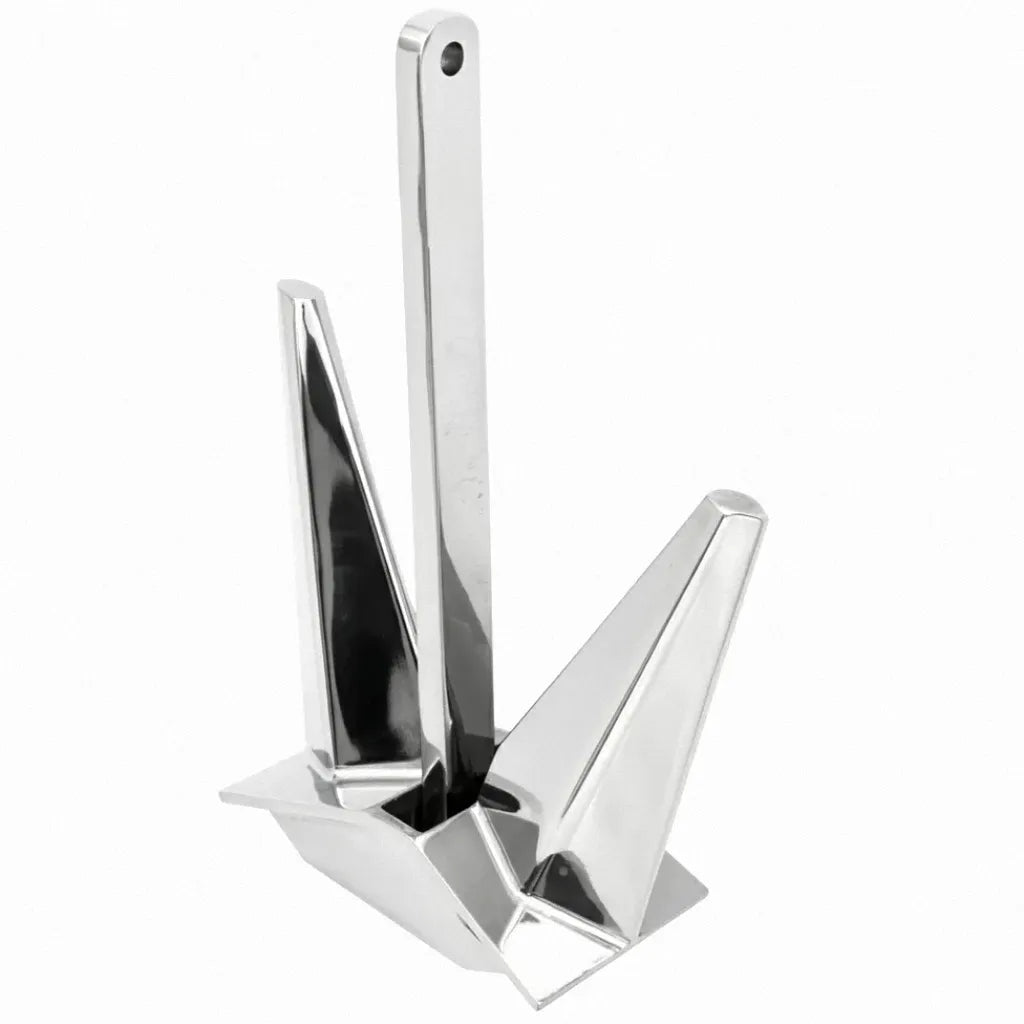
316 Stainless Steel Sand Anchor - Marine Grade Boat Mooring (18/36in)
Marine_Anchoring_System • Top Pick
Check PriceBeach day’s over when your hull hits the rocks. You trusted a cheap stake. Now you're swimming for it. A drifting vessel is a captain’s shame. It’s a liability. Most sand anchors are toys. They don't bite. They don't hold. You're betting your gelcoat on luck. Stop it.
Cheap Gear Is A Death Sentence
Galvanized trash flakes off in a month. 304 stainless pits like a teenager's face. Saltwater eats inferior metal for breakfast. Plastic augers? Don't make me laugh. They snap the second they hit real substrate. A snapped anchor means a runaway boat. If you use gear that rusts or leaks, you’re not a skipper. You’re a hazard. Check the Maintenance Advisor if you don't believe me.
The Only Real Fix: 316 Stainless Steel Sand Anchor
You need the 316 Stainless Steel Sand Anchor - Marine Grade Boat Mooring (18/36in). It’s engineered for the salt. It’s got molybdenum. That’s the secret. It fights chloride-induced corrosion. It stays structural. It stays clean. No rust. No failure. Use this for your shoreline mooring or get a Folding Grapnel Anchor - 316 Stainless Steel Mirror Polish (0.7-12kg) for the rocky stuff. For heavier hulls, look at the AirowMarine 316 Stainless Steel Plow Anchor - Mirror Polish (5kg-50kg) or a 316 Stainless Steel Danforth Boat Anchor - Mirror Polished (8.5lb-13lb).
| Material | UV Resistance | Price |
|---|---|---|
| 316 Stainless Steel | Maximum | Premium |
| Galvanized Steel | Moderate | Low |
| Reinforced Plastic | Degrades | Budget |
- Molybdenum
- A chemical element added to 316 stainless steel to provide superior resistance to pitting and crevice corrosion in saltwater environments.
- Auger
- The screw-threaded base of the anchor designed to penetrate and grip sand or clay when torque is applied via the T-handle.
Pick the 18-inch for your skiff. Take the 36-inch for the pontoon. Don't be the guy calling the tow boat because you bought a plastic stick. Secure your bulkhead. Respect the sea. Get real steel.
FAQ
- How does 316 stainless steel compare to standard anchors in saltwater?
- Standard anchors often use 304 stainless or galvanized steel which can pit and rust. Our 316 marine-grade alloy contains molybdenum, specifically preventing chloride-induced corrosion and ensuring the anchor remains structural and aesthetically pristine even after years of saltwater immersion.
- Is this anchor difficult to screw into hard-packed or clay-heavy sand?
- No. The precision-welded auger blades are sharpened to penetrate dense substrates. Combined with the 265mm wide T-handle, you can generate significant torque with minimal effort, allowing the anchor to self-pilot deep into the ground for maximum holding power.
- What size should I choose for a 22-foot pontoon boat?
- For vessels over 18 feet or those in areas with moderate current, we recommend the 36-inch Double or Triple Plate configuration. The increased shaft depth and additional surface area of the multiple plates provide the lateral shear resistance needed to secure larger hulls against wind and wave action.

Leave a comment
This site is protected by hCaptcha and the hCaptcha Privacy Policy and Terms of Service apply.