
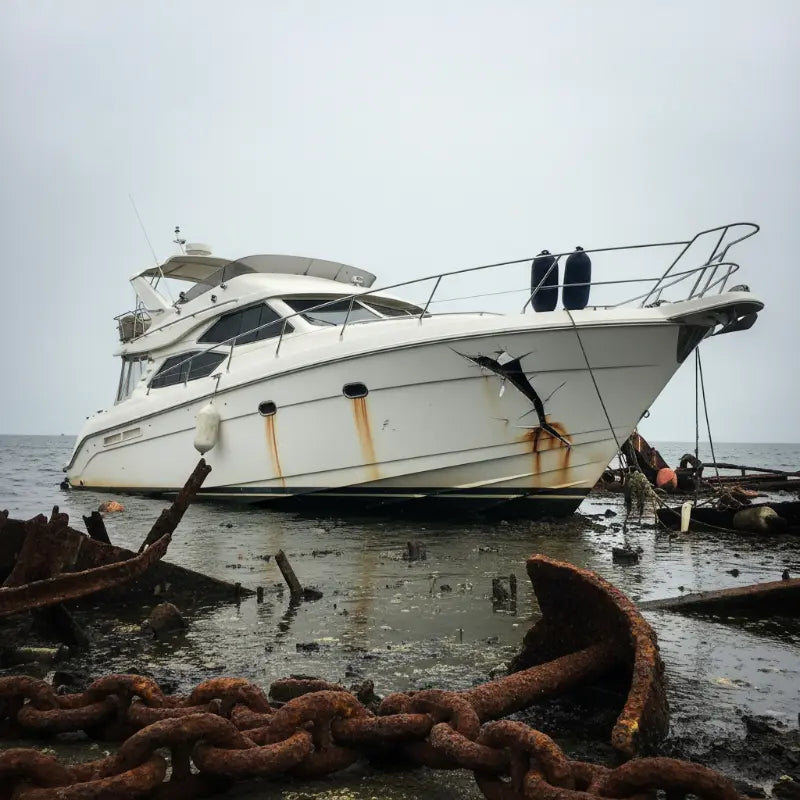
Listen up, Weekend Warriors. We are entering the 2026 Spring Launch window, and if you are still relying on factory-grade zinc alloys or bottom-shelf 304 stainless steel, your vessel is a liability.
The data is undeniable. As we face intensified salinity levels and more aggressive environmental stressors this season, the "budget-friendly" hardware you installed last year isn't just an eyesore—it’s a mechanical failure waiting to happen. In my years of marine tech analysis, I have seen standard protruding cleats shear under load and zinc-plated D-rings pit to the point of structural collapse.
The Myth of "Stainless Enough": 304 vs. 316
Many DIYers fall into the trap of thinking all stainless steel is created equal. It isn't. The industry is currently flooded with cheap 304-grade components that lack the Molybdenum content necessary to survive a high-chloride environment. By mid-July, that 304 cleat will be bleeding "tea stains" across your pristine white gelcoat.
We demand Grade 316 Stainless Steel. It is the gold standard for marine durability. Our focus this spring is on total system integrity. When you integrate components like the 316 Stainless Steel Low Profile Boat Cleat - Mirror Polished, you aren't just buying metal; you are investing in a corrosion-proof shield that maintains structural molecular stability even in extreme salt spray.

The Death of the "Toe-Stubber": Transitioning to Flush Mount
Why are you still using 1990s-era protruding cleats? They are trip hazards, line snags, and frankly, they ruin the sleek silhouette of a modern vessel. The tech-forward solution is the Flip-Up mechanism.
The 316 Stainless Steel Folding Boat Cleat - Flush Mount Flip-Up is a masterpiece of precision engineering. When not in use, it disappears into the deck profile. When needed, the "click-lock" mechanism deploys with industrial-grade rigidity. This isn't just about aesthetics; it's about eliminating "deck clutter" which is a primary cause of injuries during high-speed maneuvers.
Industrial Strength: The Heavy-Duty Folding Pad Eye
For those securing tenders, jet skis, or high-tension gear, a standard D-ring is a failure point. You need the 316 Stainless Steel Folding Pad Eye - Heavy Duty Marine D-Ring. This is the hardware that separates the amateurs from the pros. Its folding design ensures that when you aren't tied down, you have a clear, safe walking surface. Its 316-grade construction ensures that even under maximum tensile stress, the metal won't fatigue or fracture.

Urgency: The Global Supply Strain
CRITICAL UPDATE: Due to the surge in 2026 spring restoration projects, our current inventory of 316 Mirror Polished hardware is depleting at an unprecedented rate. If you wait until May, you will be facing backorders while your boat sits in the yard.
Frequently Asked Questions
Can I use 304 Stainless Steel for inland freshwater lakes?
Technically, yes, but why would you? Even in freshwater, humidity and acid rain cause 304 to pit. For the marginal price difference, 316 Stainless Steel provides a lifetime of security and a much higher resale value for your vessel.
How do I maintain the mirror-polished finish?
Rinse with fresh water after every outing. Our 316 hardware is engineered with a high-nickel content that resists oxidation, so a simple microfiber wipe-down is usually all that's required to maintain that luxury yacht glow.
Is a folding cleat as strong as a fixed horn cleat?
Yes, provided it is 316 grade and properly through-bolted with a backing plate. Our folding cleats are tested to meet or exceed the break-strength of traditional fixed cleats of the same size.


Dejar un comentario
Este sitio está protegido por hCaptcha y se aplican la Política de privacidad de hCaptcha y los Términos del servicio.