
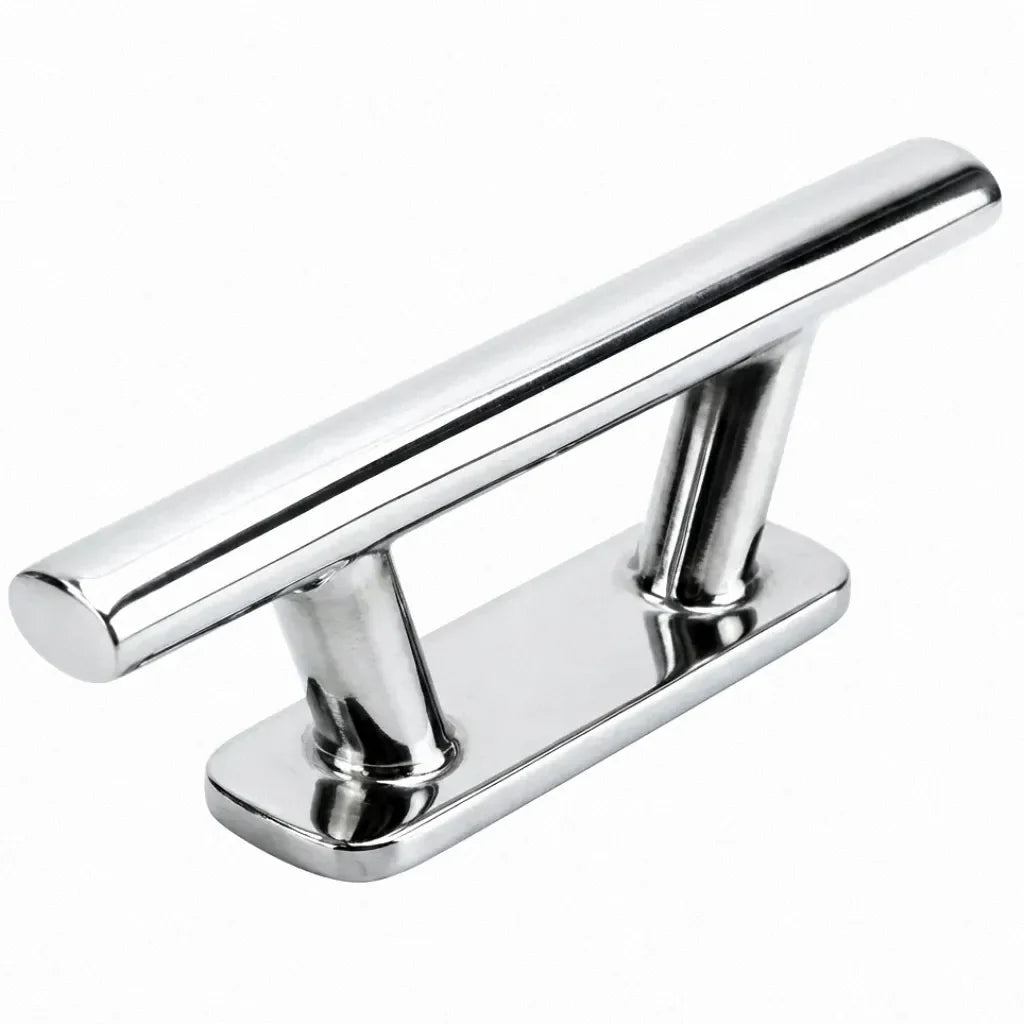

316 Stainless Steel Boat Mooring Cleat - Mirror Polished Marine Grade (6-12"")
Boat Mooring Cleats • Top Pick
Check PriceWatching the sun set over a tranquil harbor should be a moment of pure serenity, yet for many boat owners, that peace is interrupted by the sight of unsightly orange rust streaks bleeding down a pristine white hull. There is nothing more heartbreaking than seeing a vessel’s silhouette marred by pitted, dull hardware that has surrendered to the salt. When your mooring cleats begin to corrode, they don’t just lose their luster—ivey lose their integrity, turning a vital safety component into a jagged liability that saws through your expensive braided lines during a midnight swell.
Generic deck hardware often masquerades as 'marine grade,' but beneath a thin facade lies low-grade 304 stainless steel or even zinc-plated alloys that are utterly defenseless against the relentless chemical assault of the ocean. These inferior alternatives quickly lose their structural grip, developing micro-cracks and rough textures that act like sandpaper on your mooring ropes. A cheap cleat is a ticking clock, promising not only a diminished aesthetic for your boat’s exterior but a potential failure when the tide turns and the tension peaks.
To achieve a marriage of uncompromising security and high-end coastal aesthetics, the 316 Stainless Steel Boat Mooring Cleat - Mirror Polished Marine Grade (6-12") is the definitive engineered answer. Crafted from high-molybdenum alloys, this cleat provides a level of sculptural elegance and structural permanence that generic hardware simply cannot replicate. Its luminous, mirror-polished finish does more than just catch the light; it ensures a frictionless surface that protects your lines while elevating the overall visual language of your deck.
Performance Comparison: The Designer’s Standard
| Feature | 316 Stainless Steel Mooring Cleat | Generic Alternatives |
|---|---|---|
| Material | 316 Marine Grade Stainless Steel | 304 Stainless or Zinc-Plated Steel |
| UV & Corrosion Resistance | Exceptional; Saltwater Optimized | Moderate; Prone to Pitting & Tea-Staining |
| Price | Premium Investment | Low Initial Cost (High Replacement Frequency) |
As a designer, I believe that every touchpoint on a vessel should feel deliberate. When you are securing your lines, the tactile smooth quality of a mirror-polished cleat provides a sense of confidence that matches its visual brilliance. For a truly cohesive look, I recommend pairing these cleats with other high-performance hardware, such as the 316 Stainless Steel Boat Butt Hinge - Heavy-Duty Cast (50x50mm) for your hatches and a Single Cross-Bit Mooring Bollard - 316 Stainless Steel (83mm) for additional heavy-duty securing points.
Technical Glossary for the Discerning Mariner
- Molybdenum
- A chemical element added to 316 stainless steel that significantly increases resistance to chloride-induced pitting, making it essential for saltwater environments.
- Mirror Polish
- A mechanical polishing process that creates a high-gloss, reflective surface, reducing surface porosity and minimizing friction on mooring lines.
The beauty of your vessel is found in the details. Whether you are deploying a Folding Grapnel Anchor - 316 Stainless Steel Mirror Polish (0.7-12kg) or simply tying up at the slip, choosing materials that are scientifically optimized for the sea is the only way to ensure lasting luxury. For more information on why specific alloys matter, consult this Stainless Steel Guide.
FAQ
- Will this cleat rust in a saltwater environment?
- No. Unlike standard 304 stainless steel, our 316 marine-grade alloy contains molybdenum, which provides exceptional resistance to chloride-induced pitting and corrosion found in saltwater.
- Does the mirror finish serve a purpose beyond aesthetics?
- Yes. The high-gloss mirror polish creates a smooth, low-friction surface that prevents the micro-abrasions on mooring lines that lead to premature rope fraying and failure.
- Is the hollow base strong enough for heavy vessels?
- Absolutely. The hollow base design is an engineering optimization that improves stress distribution across the mounting surface while maintaining the structural integrity required for high-tension loads.


Leave a comment
This site is protected by hCaptcha and the hCaptcha Privacy Policy and Terms of Service apply.