
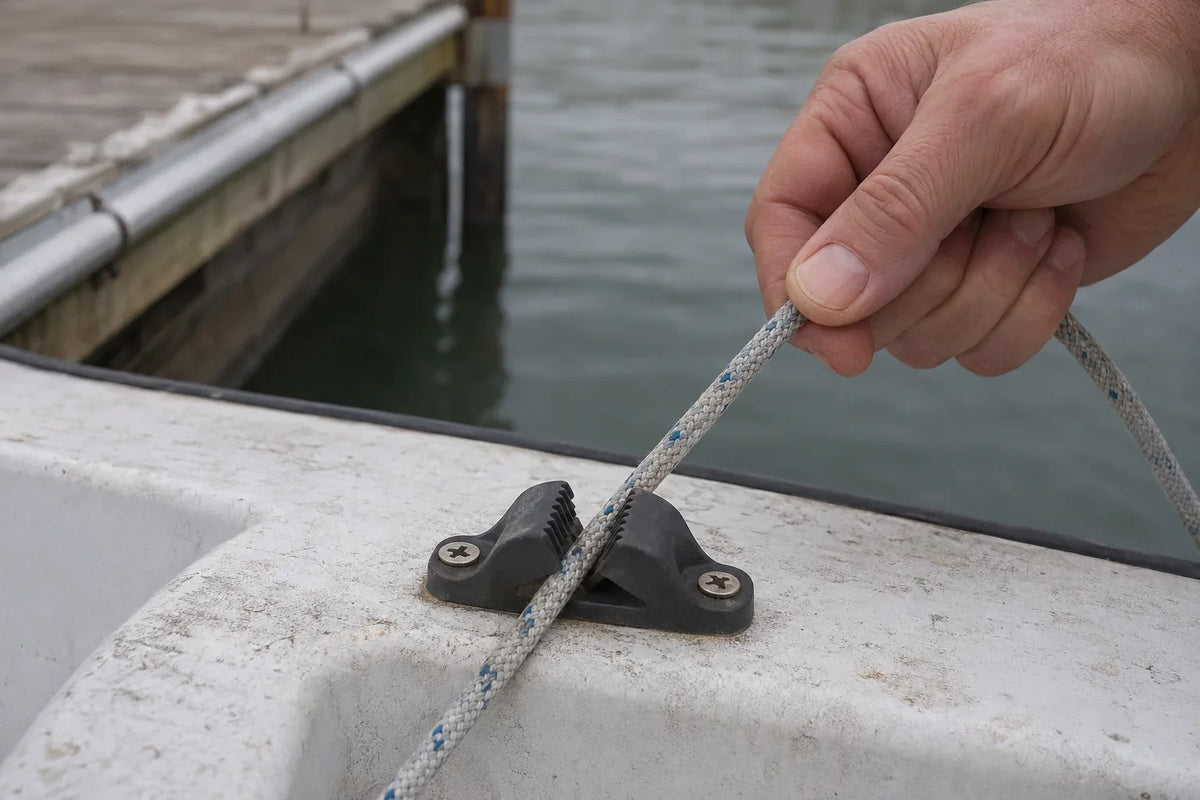
Cover image note: This AI-generated technical illustration shows a generic toothed clam cleat and line path. It is not a photograph of a specific AirowMarine product or installation; check the exact maker’s rope range and mounting instructions.
A clam cleat works by guiding a loaded line into converging teeth. That simple idea depends on three things being right at the same time: the rope must suit the cleat, the line must approach at a workable angle, and the user must be able to engage and release it without putting fingers or body weight in a dangerous place.
Start with the line, not the screw holes
Record the rope's actual diameter with light caliper pressure, its construction and whether the loaded section has become glazed, flattened or stiff. Nominal rope diameter is not enough when an old line has swollen or a soft cover compresses deeply into the teeth. Compare that information with the cleat manufacturer's stated rope range.
A line that is too large may sit on top of the teeth and appear secure until the load changes. One that is too small may bury deeply, damage its cover or release unpredictably. Highly worn, contaminated or unusually stiff rope can behave differently from a clean sample of the same nominal size.
Trace the loaded path
Lead the line through every fairlead and turning point exactly as it will be used. The line should enter the cleat in the direction intended by its geometry; a large sideways lead can reduce engagement and chafe the rope against an edge. Also check the release path. A cleat that holds well but cannot be released safely under expected working conditions is poorly located.
Mounting questions
- Is the mounting face stiff enough, or does it flex as the line is loaded?
- Can the chosen fasteners develop adequate engagement without striking a hidden wire or void?
- Will water entering a fastener hole reach core material?
- Can the line or a sleeve catch on the fastener heads?
- Is the cleat accessible without placing a hand across the loaded line?
Do not choose a replacement from a polished product photo alone. Confirm that the selected part is actually a toothed, converging-jaw line cleat—not a horn or mooring cleat—and obtain the maker's compatible rope range, load limits and mounting instructions for the exact part.
Inspect in use
With a controlled, non-critical load, observe where the rope bears. Retire or service the setup if teeth are rounded or damaged, the body is cracked or distorted, fasteners move, the rope cover is being cut, or release requires an unsafe action. Never use a small line-control cleat as an assumed substitute for a structural mooring cleat or a life-safety attachment point.
Source and limits: General rope compatibility and lead-angle considerations were checked against Clamcleat's fitting guidance. Holding capacity, fasteners and approved applications remain specific to the chosen cleat and installation.


Leave a comment
This site is protected by hCaptcha and the hCaptcha Privacy Policy and Terms of Service apply.