
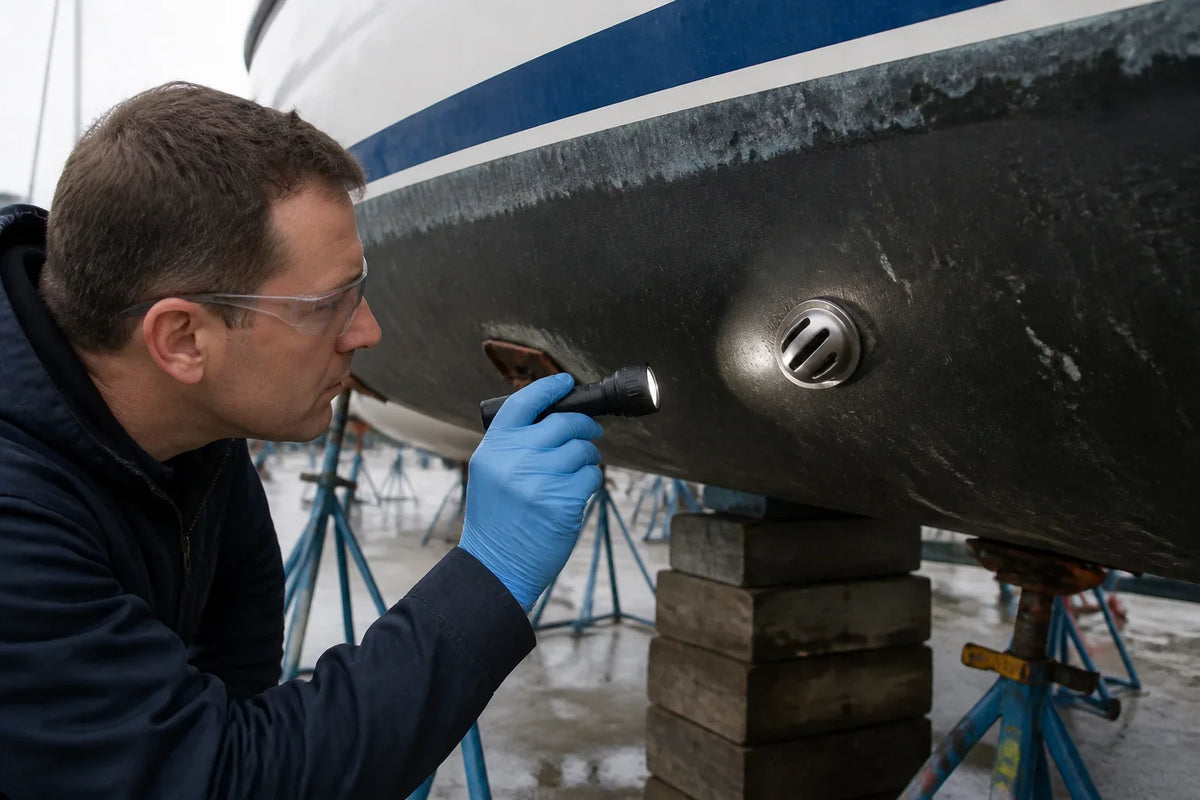
Cover image note: This AI-generated technical illustration shows a reference-based external intake-strainer inspection during haul-out. It is not evidence of a specific boat condition or completed AirowMarine work.
A raw-water intake is a below-waterline system, not a decorative fitting. The outside scoop, thru-hull, seacock or valve, tailpiece, hose, clamps and accessible shutoff all have to work together. A change to one component can alter flow, service access, corrosion exposure or the ability to stop flooding.
This article is a selection and inspection framework. It is not an installation specification. Follow the boatbuilder's documentation, the component manufacturer's instructions and the current standards applicable to your vessel. If you cannot identify or close the seacock quickly, or if any below-waterline component is loose, cracked or leaking, stop and use a qualified marine technician.
Map the system from outside to appliance
With the boat safely hauled—or using existing documentation rather than entering the water—identify the external opening and trace it inside to the supplied equipment. Label the seacock. Confirm that every person responsible for the boat can reach and operate it without moving heavy gear.
Record:
- the equipment served and its manufacturer's flow requirements;
- thru-hull and valve material;
- connection type and nominal size;
- hose inside diameter, type and route;
- number, material and condition of clamps;
- strainer orientation and service clearance;
- bonding or isolation arrangement specified for the boat;
- whether the valve can be exercised through its full travel.
Do not choose a scoop by opening size alone
An external strainer can help exclude debris and, depending on its designed orientation, influence pressure at the intake while underway. That makes orientation and application important. An engine, generator, air-conditioning pump and livewell may have different requirements. Never assume that a forward-facing scoop is correct for every appliance, particularly where forced flow could flood equipment when it is not operating.
AirowMarine's intake-strainer range shows one external form across listed sizes. Use the current product drawing only after confirming the system requirement, connection, hull thickness, fastening method and compatible material stack.
Material compatibility is a system question
“Marine-grade” on one component does not prove compatibility with the valve, fasteners, bonding system or nearby metals. Mixed metals in an electrolyte can create galvanic risk, while stagnant crevices and oxygen-starved joints create different corrosion conditions. Do not infer alloy from polish or a magnet test. Obtain documentation for the actual parts and inspect hidden interfaces.
For a general comparison of common hardware materials, read 304 vs 316 stainless steel vs galvanized steel. Below the waterline, final selection should follow the system designer or a competent marine professional.
A haul-out inspection sequence
- Photograph the external strainer before cleaning. Note paint, marine growth, impact damage and blocked slots.
- Clean using a method compatible with the material and coating. Do not enlarge openings with aggressive tools.
- Check that the body sits firmly against the hull without lifted edges, cracking or weeping.
- Inside, inspect the thru-hull, valve body, handle, fasteners or flange, tailpiece, hose and clamps.
- Exercise the valve as permitted by the manufacturer. It should reach the fully open and fully closed positions.
- Look for corrosion products, dezincification-like colour changes on susceptible copper alloys, pitting, swollen hose, fretting and water tracks.
- After relaunch, check immediately for leakage, then recheck after the system has run.
Hose clamps need more than a glance
Confirm that clamps are the correct type and size for the hose and fitting, are positioned over a proper hose barb, and can be inspected around their full circumference. A shiny band can hide a corroded screw. The public ABYC guidance on hose clamps and H-27 questions explains why below-waterline connections deserve careful attention.
When replacement is not a like-for-like job
Escalate when the new fitting changes material, outside geometry, hole size, orientation, flow area, valve arrangement or fastening. Also escalate when laminate or core damage is visible, the existing fitting rotates, or the valve lacks structural support. GROCO's installation bulletin illustrates manufacturer-specific installation requirements; use the instructions supplied with the components you actually select.
Safety boundary: Do not leave a suspected below-waterline leak unattended, and do not rely on this article to determine regulatory compliance or a safe installation.


Leave a comment
This site is protected by hCaptcha and the hCaptcha Privacy Policy and Terms of Service apply.